Switchable privacy solutions like polymer-dispersed liquid crystal (PDLC) smart film and smart glass are becoming increasingly common in commercial and residential architecture. These technologies allow glass surfaces to transition from transparent to opaque with the flick of a switch, offering flexibility in privacy, light control, and aesthetics.
However, the performance and longevity of PDLC systems depend significantly on correct installation, appropriate environment, and protection from adverse conditions. One of the most critical threats to PDLC systems — whether retro‑film or laminated smart glass — is exposure to moisture, humidity and water ingress.
In humid or wet environments, the ingress of water or continual high relative humidity can lead to electrical faults, delamination, discoloration, reduced switching performance and ultimately failure of the PDLC layer. Understanding how water and humidity damage these systems is essential for specifying, installing and maintaining them properly.
In the following chapters we delve into the mechanisms of damage, key vulnerable components, differences between installations, preventive measures and best practices for maintenance and troubleshooting.
Water Damages PDLC Smart Film
Mechanisms of Water & Humidity Damage
Moisture ingress through edges and sealing failures
Water or humid air can enter a PDLC assembly via unsealed or degraded edges, seam gaps, or improperly finished frames, undermining the internal layers and causing corrosion of electrical components.
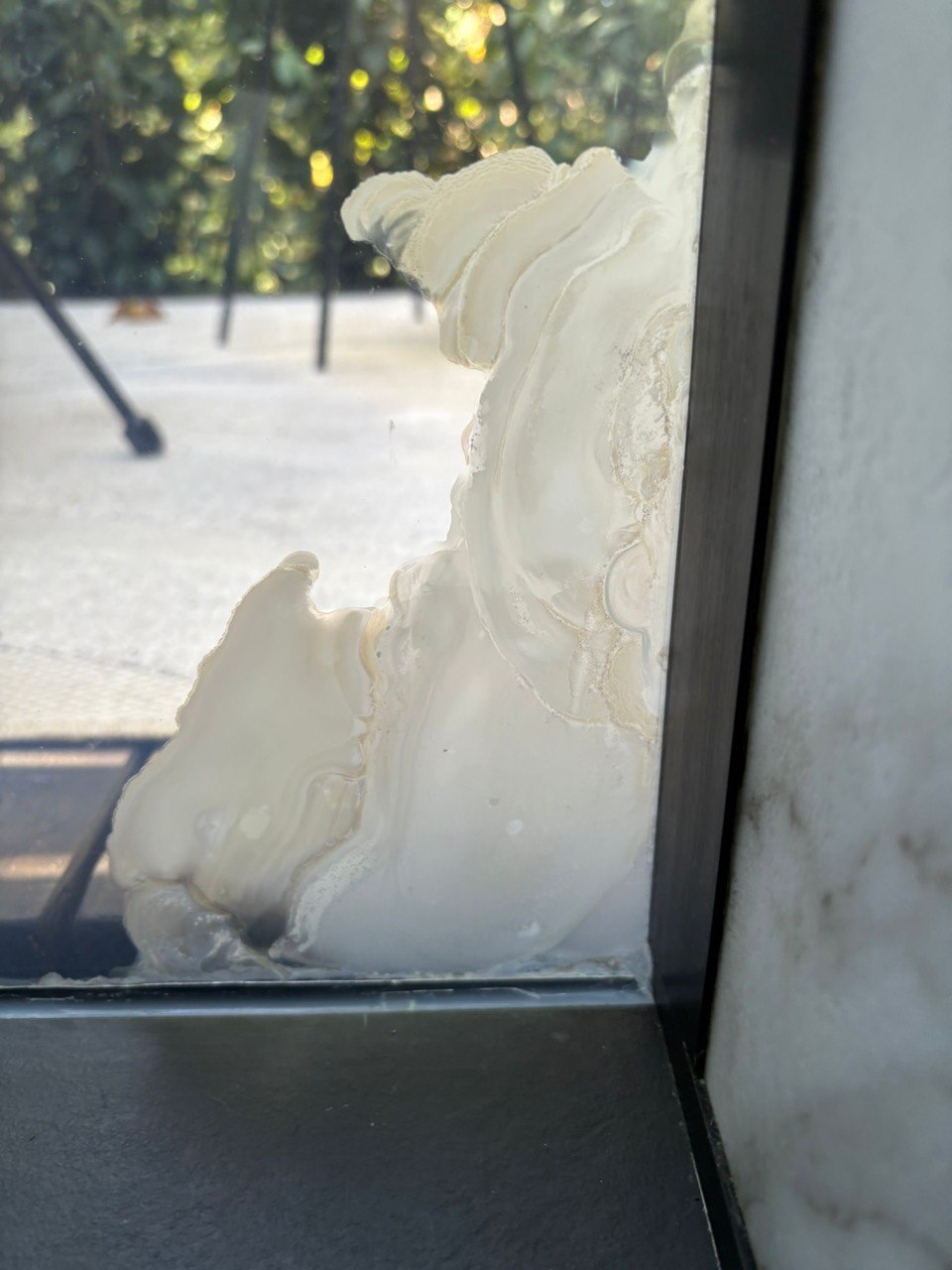
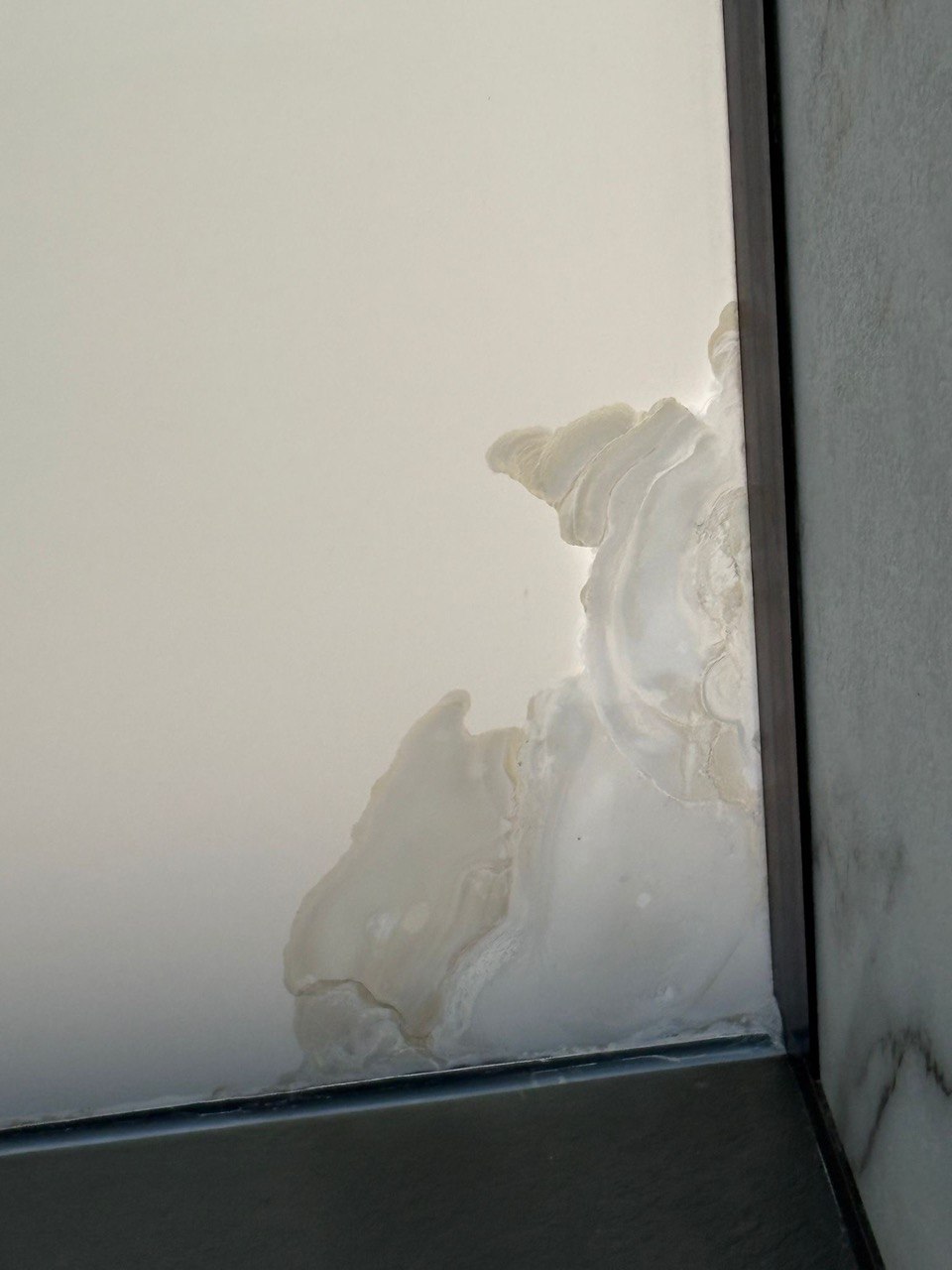
Once water reaches the edge of the film or glass, especially when the film is activated (ON), irreversible spot damage can occur, typically spreading up to 10 cm from the edge. These spots cannot be repaired and will permanently impair the functionality.
If water is present on the edge while the film is OFF, spots will not appear immediately; however, the surface must be wiped dry before reactivating the film to avoid damage.
Water on the surface of the glass or film is typically not an issue — the problem lies with edge exposure and seepage.
Water Damages PDLC Smart Film
Even without direct water contact, elevated humidity levels can degrade adhesives, delaminate layers, and accelerate the aging of electrical busbars and connectors in PDLC films or laminated glass.
Condensation on inner surfaces may create micro‑droplets that scatter light, leading to haze or clouding in transparent mode, and reducing contrast between on/off states.
Over time, moisture can degrade the dielectric layers and conductive coatings (such as ITO) used to align the liquid crystals, thus impairing the switching function.
Delamination, discoloration & adhesive failure
Moisture exposure can cause the adhesive interlayers (EVA, PVB, etc.) or the glue bonding the PDLC film to the glass to break down, leading to layer separation (delamination).
Low‑quality films or those not intended for humid environments are especially vulnerable. One source notes: “When used as the adhered film on existing glass, PDLC film … is exposed and thus vulnerable to physical and moisture damage.”
Delamination not only affects aesthetics but also allows moisture further ingress, creating a vicious circle of deterioration.
Vulnerable Components & Installation Types
Retrofit PDLC film on existing glass
In retrofit installations, the PDLC film is applied directly onto existing glass using adhesive and remains exposed on one side (rather than being sandwiched). This exposes edges, busbars and connectors more directly to ambient humidity.
The film's edges, busbar terminations and power leads are areas of weakness. Moisture infiltration here can cause partial failure (e.g., film stuck fuzzy, incomplete switching) or complete failure.
Because retrofit films are more exposed, they often require more diligent sealing and maintenance in humid settings.
Laminated PDLC smart glass (film sandwiched between glass panes)
In this format, the PDLC film is laminated between two panes of glass and sealed — offering better protection from moisture and mechanical damage.
The sealed sandwich helps protect the PDLC from direct moisture exposure, making it more suitable for humid or moisture‑prone environments (if properly installed).
In installations like home bathrooms or hotels where water may splash the glass, a smart practice is to laminate the PDLC film 1 cm away from the edge, reducing the risk of moisture contact.
Electrical connectors, busbars and seals
The electrical infrastructure (busbars, leads, transformers) in a PDLC system is highly sensitive to moisture exposure. If moisture reaches exposed conductive parts, there can be corrosion, short circuits or arcing, which can permanently damage the system.
Sealing of cable entries and the use of waterproof connectors is therefore essential.
When sealing frames or connecting multiple panes, only certified neutral-cure silicones should be used — including Toshiba/Tosseal 83/381 and Dow Corning 791, 795, 995, 1199.
Effects of Water & Humidity Damage on Performance
Loss of transparency/opacity switching performance
Moisture ingress can impede the alignment of liquid crystals, reducing the contrast between ‘on’ (transparent) and ‘off’ (opaque) states or increasing haze. Once edge damage occurs, the affected area may remain permanently visible even when powered off.
In retrofit film the result may be patchy switching, irregular clouding, or failure of sections of the film.
Haze, clouding and visual defects
Condensation or micro‑droplets trapped within the laminate can lead to scattering of light and apparent cloudiness, degrading aesthetics. These effects are often permanent once they occur.
Visual defects like edge whitening, fogging, or delamination bubbles may appear, reducing effectiveness.
Increased risk of electrical failure and safety hazard
Moisture contact with wiring, busbars or terminals can cause short‑circuits, arcing and may create a fire or shock hazard if not properly managed.
Furthermore, in laminated systems moisture can accelerate corrosion inside the sandwich, potentially shortening service life.
Reduced lifespan, increased maintenance and replacement costs
PDLC film systems have a typical lifespan of 15‑20 years “but can be shortened by damage, which includes physical damage, moisture exposure, or extreme cold.”
The need for re‑sealing, repair of busbars or entire replacement of the film/glass leads to higher long‑term costs.
Preventive Measures and Best Installation Practices
Proper edge‑sealing and frame preparation
Use a neutral‑cure (non‑acidic) silicone sealant around all edges of the film/laminate to prevent moisture ingress.
Only certified silicones should be used: Toshiba / Tosseal 83/381 or Dow Corning 791, 795, 995, 1199 — both for frame sealing and between glass panes.
For laminated glass, ensure that the interlayer is properly cured and that edge polishing and finish avoid micro‑cracks or gaps where humidity can enter.
Correct electrical installation and waterproof connectors
Busbars, leads and the transformer connection should be installed by qualified professionals, with waterproof or moisture‑resistant connectors if in humidity‑prone areas.
Joint area and wiring channels should be sealed and protected from condensation or dripping water.
Choose the right product for the environment
For high‑humidity or wet zones (bathrooms, spas, pool enclosures), prefer laminated PDLC smart glass over retrofit film, as it offers better protection.
Smart film and smart glass are not recommended for saunas unless specially insulated, as the extreme heat and humidity can degrade the PDLC layer quickly.
Consider ambient temperature, humidity, and condensation risk during specification.
Regular inspection and maintenance
Periodically inspect the edges, seals and wiring of the PDLC system for signs of water damage, delamination, haze, discoloration or electrical irregularities.
In humid areas, monitor for condensation formation and ensure ventilation or humidity control if needed.
Cleaning and moisture‑control hygiene
Use only recommended cleaning agents and avoid high‑pressure washing, prolonged water impingement or chemical agents that might degrade sealants or adhesives.
Maintain room humidity within manufacturer’s recommended limits (often < 60% or as advised) and avoid immersive water exposure unless the product is rated for it.
Case Studies, Stories & Insights
One manufacturer’s blog reports the failure scenario: “If put under water for a long time … the water can come inside the film slightly from the film edge, and then with electricity and water, minor short circuit might happen then gradually damage the film from the edge … then the film may not work or delamination at the edge.”
In a technical guidance document for PDLC glass, it is stated: “When used as the adhered film on existing glass, PDLC film … is exposed and thus vulnerable to physical and moisture damage …”
Another practitioner blog says: smart film “should not be used outdoors” because of its sensitivity to moisture, and that even indoor installation in moisture‑prone areas demands edge sealing.
These insights confirm that while PDLC technology is robust in many situations, the “weak links” are often installation quality, edge sealing, and ambient environment rather than the film itself.
Summary
Water and high humidity pose significant risks to PDLC smart film and laminated smart glass systems. Moisture ingress through unsealed edges, condensation and high ambient humidity can lead to delamination, haze, electrical failure, and reduced lifespan. Retrofit film installations are typically more vulnerable than laminated glass systems, since they offer less physical protection and rely heavily on adhesives and edge sealing.
Once spot damage or delamination begins at the edges, it cannot be reversed, highlighting the importance of choosing the right installation and certified materials. To maximize reliability and service life, proper specification, meticulous installation, certified sealants, regular inspection, and sensible maintenance are critical. For environments with persistent humidity, such as bathrooms, spas or poolside areas, laminated smart glass — possibly set back 1 cm from edges — offers superior protection compared with retrofit film.
FAQ
What causes spots to form on smart film or smart glass edges?
Spots occur when the PDLC film is activated (ON) and water comes into contact with the edge. These spots typically spread up to 10 cm from the edge and are irreversible. If water contacts the edge while the film is OFF, spots won't appear, but it must be dried before turning ON.
Can spotted or edge-damaged smart film be repaired?
No, once the film or glass has developed edge spots due to water damage, it cannot be repaired. The affected area will permanently lose proper switching functionality and visual clarity.
Is water on the surface of the film or glass dangerous?
Water on the surface is generally not a problem. The real risk is when moisture seeps into the edges or wiring, which can lead to delamination, spotting, and electrical issues.
Can I use smart glass or smart film in saunas or steam rooms?
No, standard smart glass and film are not suitable for saunas unless insulation or protective barriers are added. High temperatures and steam degrade the PDLC film and adhesives over time. Read more about Smart Glass partitions in bathrooms.
What silicone should be used to seal smart glass installations?
Only certified silicones should be used: Toshiba/Tosseal 83/381 and Dow Corning 791, 795, 995, or 1199. These are neutral-cure silicones that won’t damage the film or adhesive layers.
Is laminated smart glass safer for bathrooms and wet zones?
Yes, laminated PDLC smart glass is more robust in wet environments. In high-splash zones, the film can be laminated with a 1 cm gap from the edge to reduce moisture risk further.
How often should PDLC systems be inspected in humid environments?
Inspection every 6–12 months is recommended, especially in humid or wet areas. Check edges, seals, wiring, and switching clarity. Early detection helps avoid irreversible damage.