
Products
BLACKOUT FILM
REVERSE ADHESIVE SMART FILM PNLC
From Transparent to Dark
From Transparent to Dark

TECHNOLOGY
TECHNOLOGY
BLACKOUT FILM: PRIVACY AND LIGHT CONTROL AT THE TOUCH OF A BUTTON
BLACKOUT FILM: PRIVACY AND LIGHT CONTROL AT THE TOUCH OF A BUTTON
Blackout Smart Film, also known as blackout window film, is based on PDLC Dyed technology. A window solution that gives you complete control over privacy and light!
Blackout Smart Film switches between tinted and clear states instantly. When power is OFF, liquid crystals and dyes (LC) absorbing light, making the film tinted and black. When power is ON, the liquid crystals align, allowing light to pass through for full transparency with a VLT of 30-50%.
It's like having a built-in blind, but when you turn the power ON, the film becomes transparent, just like a regular window. You can control it with a switch, remote or even set it to change automatically with light sensors or smart home devices.
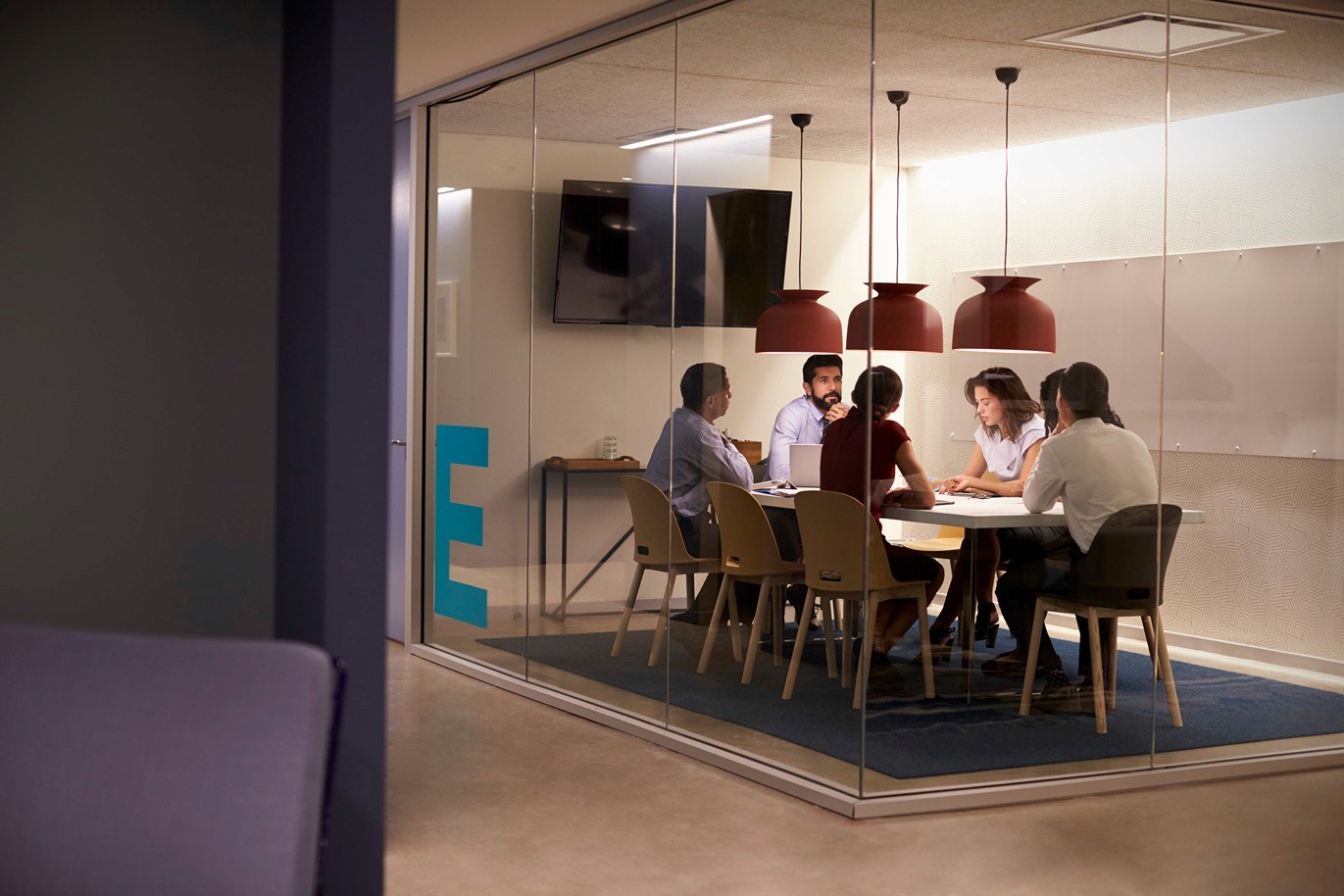
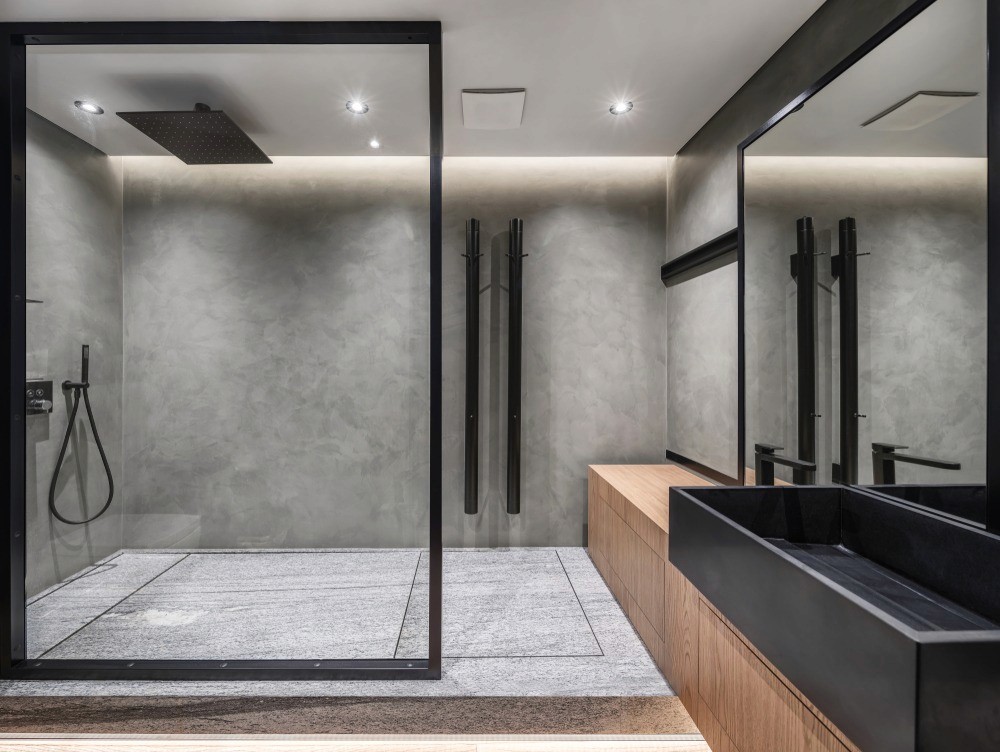
This innovative blackout film is perfect for residential use, conference rooms, video-audio sites, or any space where privacy and light control are essential.
SPECIFICATION
SPECIFICATION
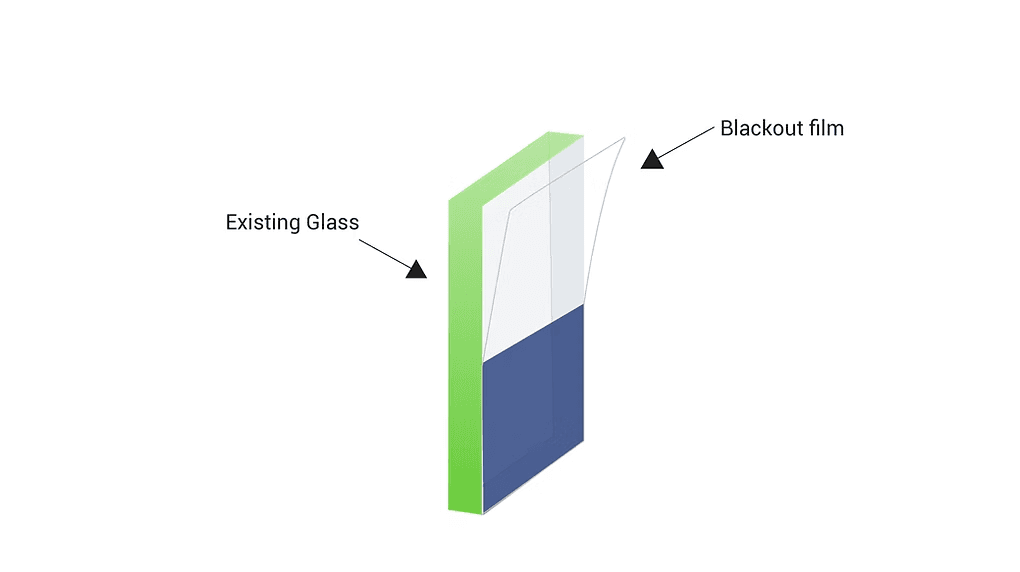
ILLUSTRATION
Max width: 1500mm; Length – unlimited
VLT: (Switched OFF: 1%, Switched ON:21%)
UV: (Switched OFF: 100%, Switched ON:97%)
IR: (Switched OFF: 98%, Switched ON:15%)
Durability > 100,000 cycles (ON & OFF)
Dimmable
Optimal voltage 48 VAC
Power consumption ~10 watt per sqm/h
Thickness - 480um
Projects
Projects
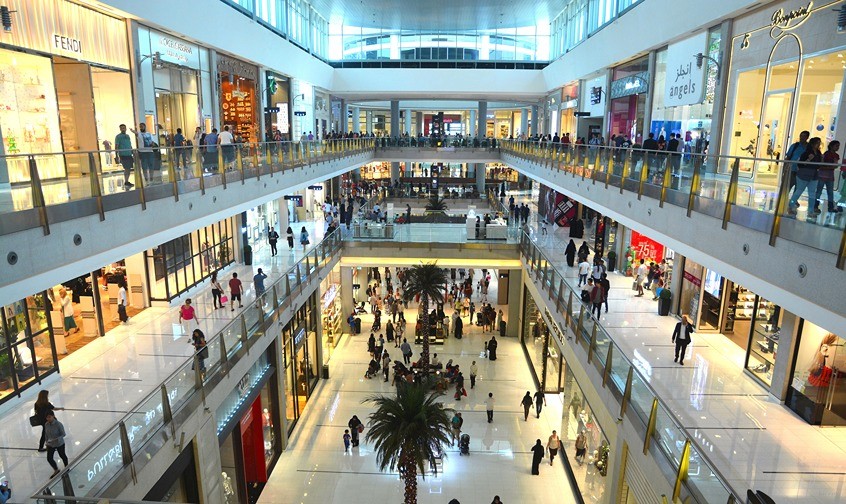
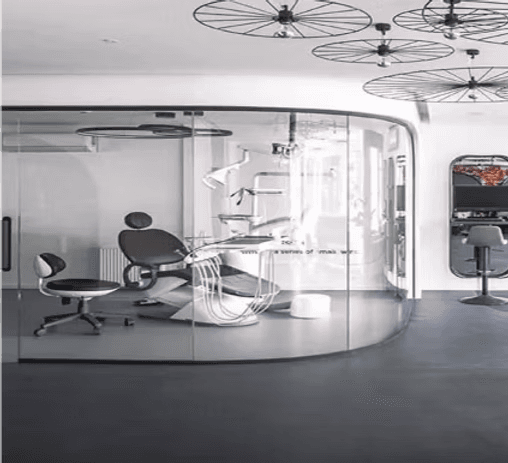
OUR BLACKOUT FILM PROJECTS
OUR BLACKOUT FILM PROJECTS



FAQS
FAQS
FREQUENTLY ASKED QUESTIONS
FREQUENTLY ASKED QUESTIONS
Does DLC Blackout Film require additional UV protection?
What are the disadvantages of Smart Glass?
Normally not necessary.
For indoor glass, UV exposure is already low and the film's formulation is sufficient to resist UV degradation on its own.
For exterior-facing glass that already has a Low-E coating, no additional UV protective film is needed either.
What are the disadvantages of Smart Glass?
What are the differences between DLC Smart Flm and SPD Glass?
What are the disadvantages of Smart Glass?
Both DLC and SPD require continuous power to maintain the clear/transparent state, and both default to a dark appearance when unpowered.
A major practical difference is the format: SPD is available only as laminated glass, while DLC is available both as a self-adhesive film that can be applied to existing glass and as a laminated glass format — making DLC far more flexible for retrofitting existing installations.
The other key difference is in the quality of the dark state: DLC achieves a true near-total blackout (as low as 0.9% VLT), giving a clean black opaque appearance. SPD produces a very dark blue-grey tint but cannot fully block light.
DLC is therefore the better choice for applications where complete privacy or blackout is required, as well as for retrofit projects. SPD is typically chosen for variable solar control and glare reduction in new glazing installations.
What are the disadvantages of Smart Glass?
What control options are available for DLC Smart Film?
What are the disadvantages of Smart Glass?
The film supports On, Off, and Dimming modes via certified controllers. It can be operated by wall switch, remote control, motion sensors, light sensors, or integrated into smart home / building management systems. Switching time is under 150ms — effectively instant to the human eye.
What are the disadvantages of Smart Glass?
What widths and roll sizes are available for DLC Smart Film?
What are the disadvantages of Smart Glass?
Standard widths are 1000mm (39"), 1200mm (47"), and 1500mm (59"), with custom widths available on request. Rolls come in 30m (~100 ft) or 50m (~165 ft) lengths.
The film can also be supplied cut to size for specific installations.
What are the disadvantages of Smart Glass?
Why are there two types — DLC 1% and DLC 3%? Which one should I choose?
What are the disadvantages of Smart Glass?
The number refers to the visible light transmittance in the OFF (privacy) state.
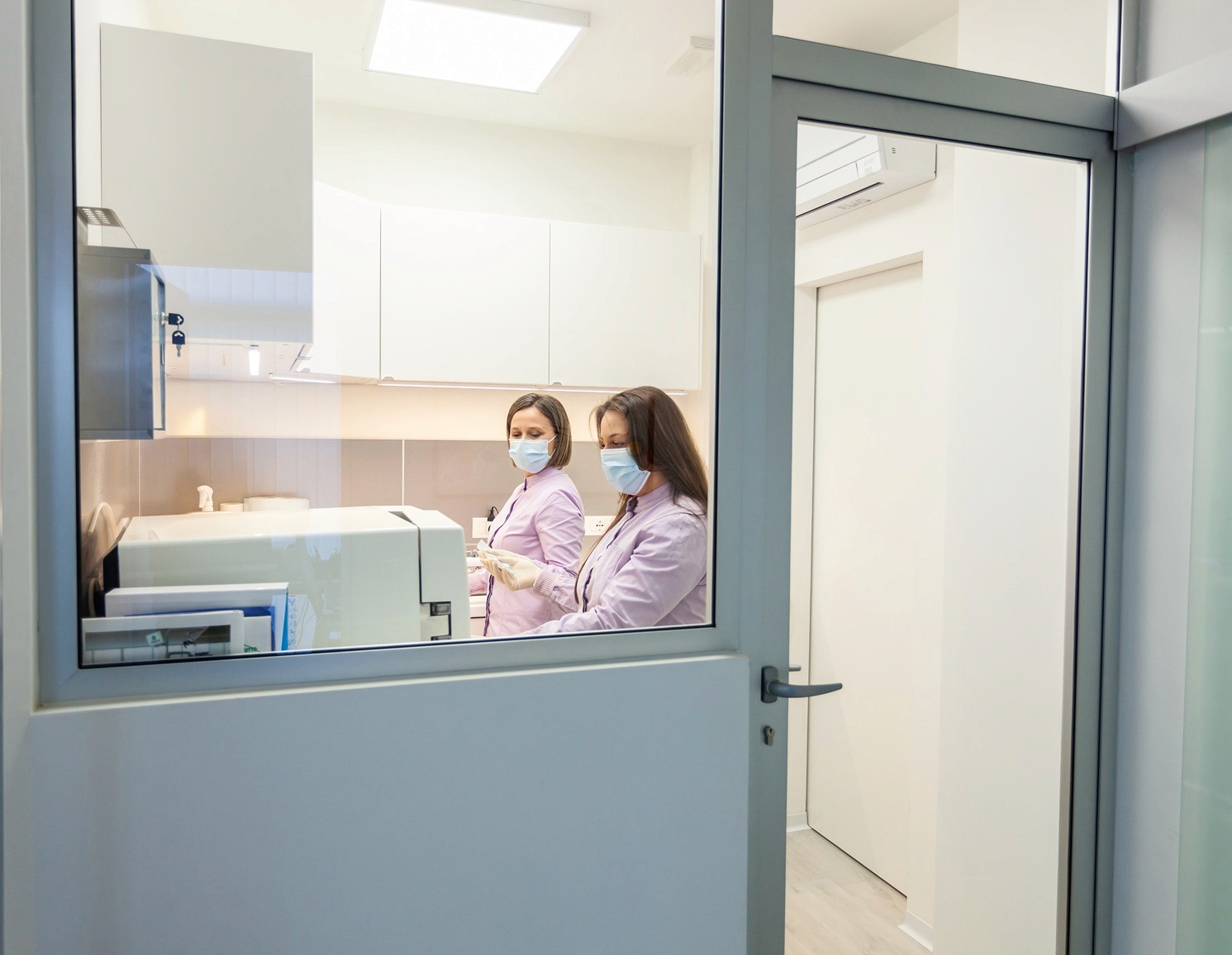
DLC 1% provides near-total blackout (0.9% VLT off, contrast ratio 20:1) — best for medical rooms, bathrooms, and AV/media spaces.
DLC 3% transmits 3% of light when OFF (contrast ratio 8:1) — suitable for office partitions, conference rooms, and showrooms where a fully blacked-out appearance is not critical.
Both share identical dimensions, electrical specs, and application compatibility.
What are the disadvantages of Smart Glass?
What is the recommended operating voltages of DLC Blackout Smart Film?
What are the disadvantages of Smart Glass?
Blackout Film operates at 48V AC / 50Hz.
The controller input supply accepts standard mains voltage (110V or 220V AC) and steps it down internally — no external transformer is needed beyond the included controller.
What are the disadvantages of Smart Glass?
Does DLC Blackout Film provide complete privacy and block all light?
What are the disadvantages of Smart Glass?
It depends on the variant. The DLC 1% model offers near-complete blackout when OFF — blocking 99.1% of visible light (transmitting only 0.9% ±0.3%), making it suitable where full privacy is critical.
The DLC 3% transmits 3% of light in the OFF state, offering strong privacy with a slight ambient glow. Both reach 100% haze in the OFF state, making the glass fully opaque in appearance.
What are the disadvantages of Smart Glass?
What is the power consumption of the DLC Blackout Film?
What are the disadvantages of Smart Glass?
Power is consumed only when the film is ON (transparent state). Consumption ranges from 6 to 15 W/m² (0.56–1.39 W/sq. ft), varying with temperature.
In the OFF (privacy) state, the film draws no power — making it energy-efficient by default for privacy applications.
What are the disadvantages of Smart Glass?
What is the main advantage of DLC Smart Film over standard PDLC Film?
What are the disadvantages of Smart Glass?
Standard PDLC film switches between a milky/frosted white and clear. DLC (Dyed Liquid Crystal) adds dye molecules to the liquid crystal layer, enabling a switch between a dark/black tinted state and full transparency.
This means a much higher contrast ratio, better aesthetics for applications that need blackout rather than a spattering light like the milky effect of standard PDLC.
What are the disadvantages of Smart Glass?
Is DLC Blackout Film available also in glass format (Blackout Smart Glass)?
What are the disadvantages of Smart Glass?
Yes.
The same DLC technology is available in two formats: self-adhesive film (applied to existing glass surfaces) and laminated smart glass (the film is factory-laminated between two glass panes).
Blackout Smart Glass is ideal for new installations or frameless partitions, while the film format is more suitable for retrofitting existing glazing.
What are the disadvantages of Smart Glass?
Let’s Talk!
Join Our Newsletter





Copyright © All Rights Reserved
Let’s Talk!
Join Our Newsletter
Copyright © All Rights Reserved
Let’s Talk!
Join Our Newsletter
Copyright © All Rights Reserved